
Smyrna
Ancient Greek city on the Aegean coast, later İzmir.

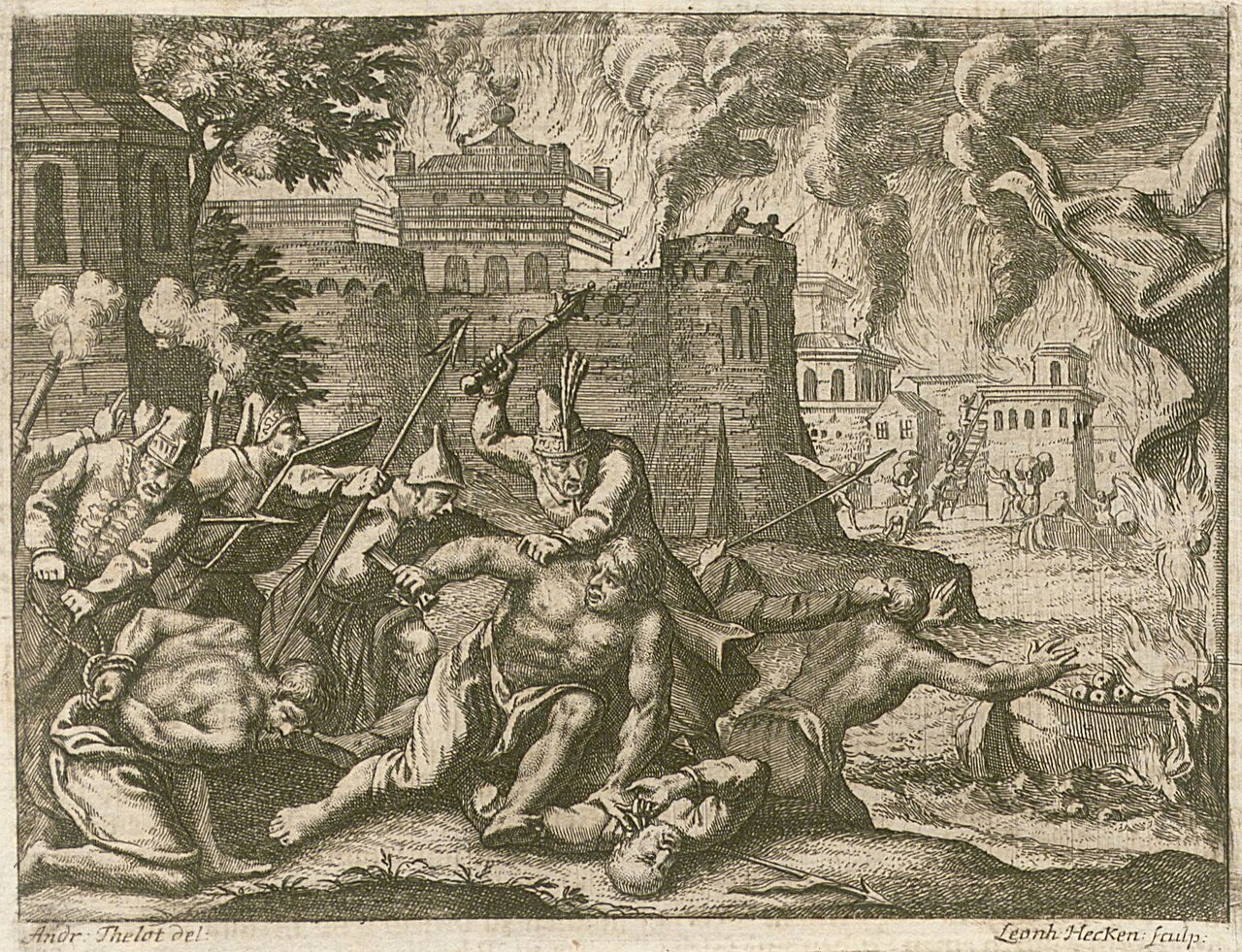
Johann Andreas Thelot · Public domain
Smyrna was an Ancient Greek city located at a strategic point on the Aegean coast of Anatolia. Due to its advantageous port conditions, ease of defence, and good inland connections, it rose to prominence. Two sites of the ancient city are today within İzmir's boundaries: Old Smyrna, founded around the 11th century BC, and New Smyrna, whose foundation is associated with Alexander the Great.
- Founded
- 11th century BC (Old Smyrna)
- Location
- Aegean coast of Anatolia (modern İzmir, Turkey)
- Field
- Ancient Greek city-state
- Known for
- Major port, trade hub, one of the Seven Churches of Revelation, cult of Roma
- Period
- Archaic through Roman and Byzantine periods
Lore & Background
Smyrna was one of the principal cities of Roman Asia, vying with Ephesus and Pergamum for the title 'First City of Asia.' A Christian church and bishopric existed there from earliest times, and it was one of the seven churches addressed in the Book of Revelation. Most of the ancient city's present-day remains date to the Roman era, the majority from after that earthquake.
Reader's Guide
Smyrna's significance lies in its long history as a major Greek and Roman city on the Aegean coast of Anatolia, a key trade hub connecting Anatolia and the Aegean. Its advantageous port and inland routes allowed it to rise to prominence during the Archaic Period and later become a leading city in the Roman province of Asia. The city is notable for its role in early Christianity as one of the seven churches of Revelation and as the seat of Bishop Polycarp. Smyrna also contributed to Roman religious history by creating the cult of the goddess Roma in 195 BC, which became widespread throughout the empire. The city's two archaeological sites—Old Smyrna (Bayraklı Höyüğü) and New Smyrna (the İzmir Agora Open Air Museum)—provide evidence of its continuous habitation and development from the 11th century BC through the Roman and Byzantine periods. Today, the modern city of İzmir occupies the site, preserving the ancient remains within its boundaries.
Did You Know?
- The city built a temple to the goddess Roma in 195 BC, though some sources suggest an earlier temple existed in Rhodes.
- Smyrna was one of the seven churches addressed in the Book of Revelation.
- The Meles River, which flowed by Smyrna, was associated with Homer, who was called Melesigenes.
Strategic Geography and Trade Dominance
Smyrna occupied a uniquely advantageous position on the Aegean coast of Anatolia, sitting at the mouth of the small river Hermus and at the head of a deep arm of the sea known as the Smyrnaeus Sinus. This deep gulf allowed Greek trading vessels to sail far inland into the heart of Lydia, making the city a critical node on one of Anatolia's great trade routes. The route descended the Hermus valley past Sardis, then diverged south of Mount Sipylus through a low pass into the narrow valley where Smyrna nestled between mountains and the sea. For a time, Miletus and Ephesus rivaled Smyrna as the sea-end terminus of a competing Anatolian trade corridor, but once both rivals' harbors silted up, Smyrna stood without a competitor. The city commanded the inner Gulf of İzmir from a small peninsula joined to the mainland by a narrow isthmus, at the edge of a fertile plain and the foot of Mount Yamanlar. Its port conditions, defensive ease, and strong inland connections collectively propelled it to prominence during the 7th century BC.
Two Cities, One Name
The name Smyrna actually encompasses two distinct urban settlements within modern İzmir's boundaries. The first, Old Smyrna, was probably founded by indigenous peoples around the 11th century BC as an Aeolian community and later developed by the Ionians during the Archaic Period. Its archaeological remains, now called Bayraklı Höyüğü, lie roughly 700 metres inland in the Tepekule neighbourhood of Bayraklı. The second city, Smyrna proper, emerged in the 4th century BC on the slopes of Mount Pagos (today's Kadifekale) and along the coastal strait, its foundation inspired by Alexander the Great and physically carried out under Antigonus and Lysimachus, who enlarged and fortified it. This later city reached metropolitan scale during the Roman Empire, and most surviving remains date to the Roman era, largely from after a devastating 2nd-century AD earthquake. Systematic research has been underway since 1997 at Old Smyrna and since 2002 at the Classical Period site, conducted jointly by the İzmir Archaeology Museum and the Metropolitan Municipality of İzmir.
The Hellenistic City's Urban Fabric
The Hellenistic and early Roman city of Smyrna was a marvel of planned urbanism, its beauty frequently praised by ancient writers and immortalized on its coinage. The core of this city is preserved today in the İzmir Agora Open Air Museum. Streets were broad, well paved, and laid out at right angles, many bearing the names of temples. The principal thoroughfare, called the Golden Street, stretched west to east across the city, likely beginning at the temple of Zeus Akraios on the western slope of Pagos and curving around the hill's lower slopes toward Tepecik, where the temple of Cybele, worshipped as Meter Sipylene, probably stood. The city possessed two harbors: an outer open roadstead on the gulf and an inner small basin with a narrow entrance that Tamerlane partially filled in 1402. A gymnasium stood near the Ephesian gate, the outline of a stadium remained visible, and a theatre occupied the north slopes of Pagos. Yet the lower town's plain was poorly drained, and in rainy seasons the streets became deep with mud and standing water.
Homer, the Meles, and Literary Memory
No feature of Smyrna's cultural landscape is more deeply embedded in the Greek literary imagination than the Meles River and its association with Homer. A consistent tradition placed the poet in the valley of Smyrna and along the banks of the Meles, bestowing on him the epithet Melesigenes, meaning born of the Meles. A cave near the river's source was shown as the spot where he composed his poems, and a temple called the Homereum stood on its banks. Homer's figure became one of the standard types struck on Smyrna's coins, a class numismatists still refer to as Homerian. The river itself was worshipped in the valley, and its steady, equable flow in both summer and winter, along with its short course beginning and ending near the city, was celebrated by the orators Aristides and Himerius. The Meles rose from abundant springs east of the city and emptied into the southeast extremity of the gulf, threading through the very landscape that gave Smyrna its literary identity.
Gallery
Frequently Asked Questions
What is Smyrna?
Smyrna was an Ancient Greek city-state perched on the Aegean coast of Anatolia, whose natural harbor and inland trade routes made it a major commercial center. Its territory now falls within the modern city of İzmir, Turkey.
What made Smyrna stand out among other Greek cities?
Its defensible coastline, well-protected port, and strong links to the interior gave it a strategic edge over neighboring settlements. From the Archaic period through the Roman and Byzantine eras, it functioned as one of the region's leading trade hubs.
Why is Smyrna important in ancient history?
Beyond its role as a bustling port, Smyrna is remembered as one of the Seven Churches named in the Book of Revelation and as a center for the cult of Roma. It also served as a cultural and economic bridge linking the Greek, Roman, and Byzantine worlds.
When was Smyrna founded, and by whom?
Old Smyrna was established around the 11th century BC, while the later New Smyrna is traditionally associated with the era of Alexander the Great. Both sites lie within present-day İzmir.
Elsewhere in the Ancient Cities universe
Spotted an error? Know more?
This is a living reference — every entry is fact-audited, and reader corrections feed straight into our audit queue. Suggest an edit · See this site's audit record