Sijilmasa
Medieval Moroccan trade hub at the Sahara's edge.

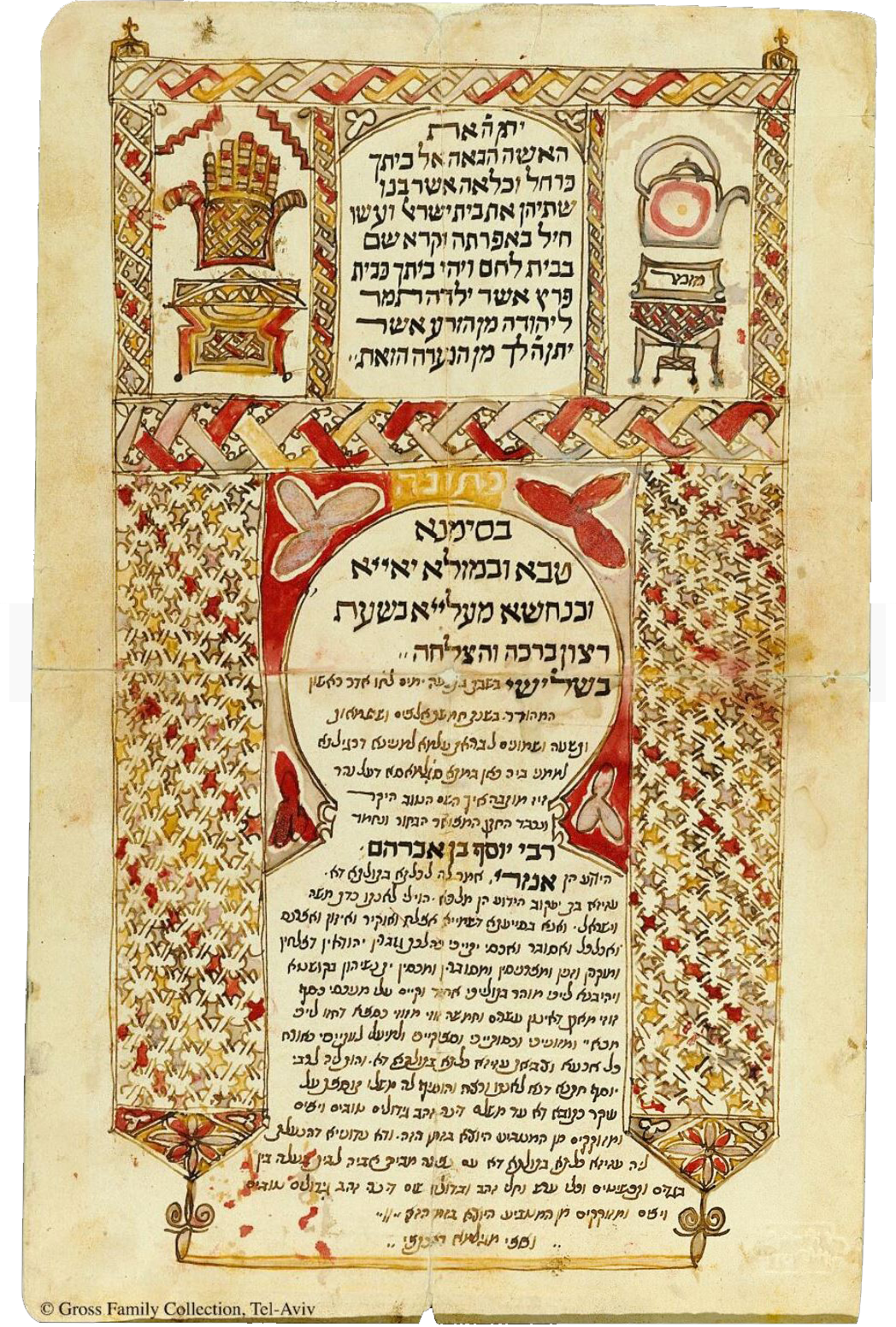
Ketubot Collection of the National Library of Israel · CC BY-SA 3.0
Sijilmasa was a medieval Moroccan city and trade entrepôt at the northern edge of the Sahara in Morocco. Its ruins extend for five miles along the River Ziz in the Tafilalt oasis near the town of Rissani. Its founding is associated with the creation of the Tafilalt oasis, and much of its economic success during the medieval period has been attributed to the agricultural capabilities granted by the oasis' massive canal. Up until the 14th century, as the northern terminus for the western trans-Sahara trade route, it was one of the most important trade centres in the Maghreb during the Middle Ages.
Lore & Background
According to al-Bakri's Book of Routes and Places, Sufrite Kharijites first settled the town after the Berber revolts against the Umayyads. They elected a leader, 'Isa bin Mazid al-Aswad, who ruled for 14 years before being executed. Abu al-Qasim Samgu bin Wasul al-Miknasi then became leader, founding the Midrar dynasty. Al-Masudi noted gold from Sudan was minted there. In the 10th century, Abd Allah al-Mahdi Billah, later founder of the Fatimid dynasty, fled to Sijilmasa with his son al-Qa'im. They hid for four years under the Midrar ruler Prince Yasa', but were imprisoned after the Abbasid caliph sent a warning to Yasa'. After Yasa' was killed, the Midrar dynasty fragmented, leading to a takeover by the Maghrawa Berbers. Under the Maghrawa, the city remained a trade centre. Later, the Marinids took control. Leo Africanus, in the early 16th century, found Sijilmasa destroyed but noted its stately walls, temples, and colleges.
Reader's Guide
Sijilmasa's significance lies in its role as the northern terminus of the western trans-Sahara trade route, making it one of the most important trade centres in the Maghreb during the Middle Ages. Its economic power derived from the massive canal of the Tafilalt oasis, which enabled agriculture, and from its position funneling gold, salt, and other goods between sub-Saharan Africa and the Mediterranean. Sijilmasa also served as the first mint for the Almoravid dynasty, solidifying its economic role. Its history of successive Berber dynasties—Midrar, Maghrawa, Almoravid, Almohad, and Marinid—reflects the shifting political landscape of medieval Morocco.
Did You Know?
- The city was one of several mints used by the Almoravid dynasty, including those in Aghmat and Marrakesh.
Founding and the Rise of the Midrar Dynasty
The origins of Sijilmasa trace back to Sufrite Kharijite settlers who arrived in the Tafilalt region in the aftermath of Berber uprisings against Umayyad authority. The geographer al-Bakri records that these initial colonists were gradually joined by others until their numbers reached roughly four thousand, at which point they formally laid the groundwork for a city. They collectively elected 'Isa bin Mazid al-Aswad, known as "the Black," to manage their affairs in those earliest years. Yet his rule lasted only fourteen years before his own companions accused him of corruption and executed him. Leadership then passed to Abu al-Qasim Samgu bin Wasul al-Miknasi, a chief from a branch of the Miknasa tribe, whose descendants would govern as the Midrar dynasty. This founding narrative reveals a community that initially valued collective decision-making—choosing a leader, then removing him—yet rapidly consolidated authority into a hereditary line that would steward the city through centuries of political upheaval.
The Oasis Engine and Trans-Saharan Commerce
Sijilmasa's position at the northern rim of the Sahara, straddling the River Ziz within the Tafilalt oasis, made it a natural crossroads for desert commerce. Much of its medieval prosperity is attributed to the agricultural capacity unlocked by the oasis's massive canal system, which sustained both the local population and the caravans passing through. The city's economic significance grew dramatically when trade corridors shifted: a once-direct route between Egypt and the Ghana Empire was abandoned because of the severity of the crossing, and merchants instead funneled through the Maghreb to Sijilmasa before heading south. The geographer Ibn Hawqal, writing around 988, recorded a staggering bill of 42,000 dinars issued to a trader in Awdaghust by a Sijilmasa-based merchant—a sum he claimed to have never encountered in all his travels. Al-Masudi further noted that gold from Sudan was minted within the city's walls. By the fourteenth century, Sijilmasa stood as the northern terminus of the western trans-Saharan trade route and one of the Maghreb's preeminent commercial centers.
The Fatimid Interlude and the Midrar Collapse
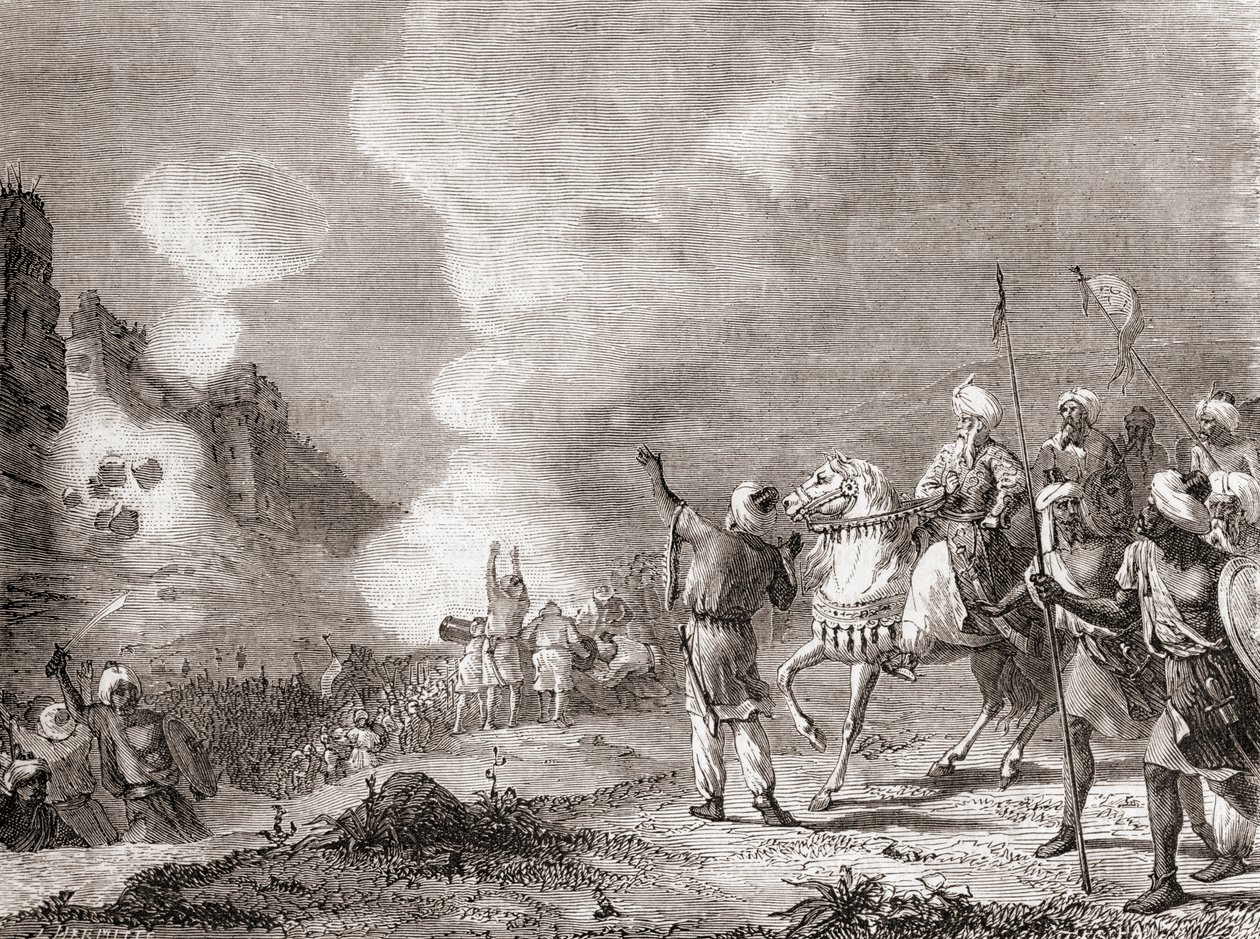
In 905, 'Abd Allah al-Mahdi Billah and his son al-Qa'im arrived in the Maghreb, fleeing Abbasid persecution for their Isma'ili Shi'ite beliefs. According to local legend, their journey fulfilled a prophecy that the mahdi would travel from Mesopotamia to Sijilmasa. Under the protection of Midrarid Prince Yasa', the father and son concealed themselves among the city's population for four years. Tensions erupted when 'Abd Allah's son reportedly caused a spring to burst forth outside the walls; a Jewish resident witnessed the event and spread word that 'Abd Allah intended to seize the city. Simultaneously, Yasa' received a warning letter from the Abbasids in Baghdad urging him to close his borders. Forced to act, he imprisoned the men who had sheltered the Fatimid pair. One of 'Abd Allah's servants escaped to Kairouan, where the Isma'ili leader Abu 'Abdallah raised an army. On his march toward Sijilmasa, Abu 'Abdallah subdued the nearby Ibadi stronghold of Tahert. His forces reached the Tafilalt in late 909 and besieged the city. Yasa' was killed that year or the next, and the Midrar dynasty entered a long fragmentation that ultimately allowed the Maghrawa Berbers—former clients of the Cordoban caliphate—to take hostile control.
Dynastic Turnovers and the Imposition of Orthodoxy
Sijilmasa's wealth made it a perpetual prize for successive Berber powers. After roughly sixty years of Maghrawa rule, the city's elders appealed to the emerging Sanhaja confederation, which was coalescing into the Almoravid movement. In 1055, the spiritual leader Abdallah ibn Yasin brought his army to Sijilmasa and killed the Maghrawa ruler Mas'ud ibn Wanudin al-Maghrawi. The Almoravids imposed a rigid interpretation of Islam across the city, destroying musical instruments and shuttering wine shops. Despite repeated local rebellions against the garrison, Sijilmasa became the movement's first conquest and the site of its first mint, a role it retained as the Almoravids' sole minting center from 1058 to 1100. The nearby mountain fortress of Jebel Mudawwar was also established during this period. When the Almohad Caliphate seized the city in 1146, they too exploited its trade revenues, but their governance was marked by far greater violence than the Almoravids' strictness, culminating in the massacre of many of Sijilmasa's Jewish residents. The city's repeated subjugation by new Berber dynasties underscores how its commercial importance made it both a target and a linchpin of North African political power.
Gallery
Frequently Asked Questions
What was Sijilmasa?
Sijilmasa was a medieval Moroccan trading city perched at the northern rim of the Sahara, functioning as one of the Maghreb's most significant commercial hubs during the Middle Ages.
Where are the ruins of Sijilmasa today?
The remains stretch roughly five miles along the River Ziz within the Tafilalt oasis, just near the modern Moroccan town of Rissani.
Why was Sijilmasa so economically powerful?
Its prosperity rested on two pillars: the Tafilalt oasis's massive canal network, which made large-scale farming possible, and its position as the northern terminus of the western trans-Saharan caravan route.
What made Sijilmasa stand out among other medieval trade cities?
Unlike many desert trade posts, Sijilmasa paired its caravan-gateway role with genuine agricultural production powered by the oasis canal, letting it supply both goods and food to the broader Maghreb market.
Elsewhere in the Ancient Cities universe
Spotted an error? Know more?
This is a living reference — every entry is fact-audited, and reader corrections feed straight into our audit queue. Suggest an edit · See this site's audit record