Hattusa
Capital of the Hittite Empire in the late Bronze Age.

Murat Özsoy 1958 · CC BY-SA 4.0
Hattusa, also known as Hattuşa, Ḫattuša, Hattusas, or Hattusha, was the capital of the Hittite Empire in the late Bronze Age during two distinct periods. Its ruins lie near modern Boğazkale, Turkey, within the great loop of the Kızılırmak River.
- location
- Near modern Boğazkale, Turkey
- period
- Late Bronze Age (two distinct periods as capital)
- systematic_excavation
- Early 20th century (German Oriental Society and German Archaeological Institute)
Lore & Background
The earliest traces of settlement at Hattusa date from the 6th millennium BC during the Chalcolithic period. Toward the end of the 3rd millennium BC, the Hattian people established a settlement there, calling it Hattush. In the 19th and 18th centuries BC, Assyrian merchants from Kanesh set up a trading post in the lower city. Nevertheless, the city was rebuilt by the Hittite king Hattusili I. The capital shifted temporarily north to Sapinuwa under Tudhaliya I and south to Tarhuntassa under Muwatalli II, but Mursili III moved it back to Hattusa during his reign (c.
Reader's Guide
Hattusa is significant as the political and religious heart of the Hittite Empire, one of the great powers of the ancient Near East. Its ruins, including massive walls, temples, and gateways with reliefs of warriors, lions, and sphinxes, reflect the city's peak under Suppiluliuma I (c. The discovery of cuneiform royal archives, known as the Bogazköy Archive, has been crucial for understanding Hittite language, law, diplomacy, and literature. Excavations have continued for over a century, revealing layers from the Chalcolithic period through the Hittite era and later agricultural settlements. Hattusa's legacy endures as a UNESCO World Heritage Site and a key source for the study of ancient Anatolian civilizations.
A Capital Forged by Conquest and Return
Hattusa's story as a political center is one of dramatic reversals. After the Hattian people established a settlement on the site toward the end of the third millennium BC, the city suffered a devastating blow around 1700 BC when King Anitta of Kussara burned it to the ground. In a striking act of royal theater, Anitta erected an inscribed curse warning that any future king who resettled the city would be struck down by the Stormgod of the Sky. Yet the city rose again, possibly under Anitta's own son. The true turning point came around 1650 BC, when Hittite king Labarna transferred the capital from Neša to Hattusa and adopted the name Hattusili, meaning the man from Hattusa. The city's status as capital was not permanent, however. Kaskian incursions from the north forced Tudhaliya I to relocate the seat to Sapinuwa, and later Muwatalli II moved it south to Tarhuntassa. It was not until the mid-thirteenth century BC, under Mursili III, that Hattusa reclaimed its role as the empire's heart, a position it held until the Hittite state crumbled in the twelfth century BC.
A Fortress City of Stone and Scale
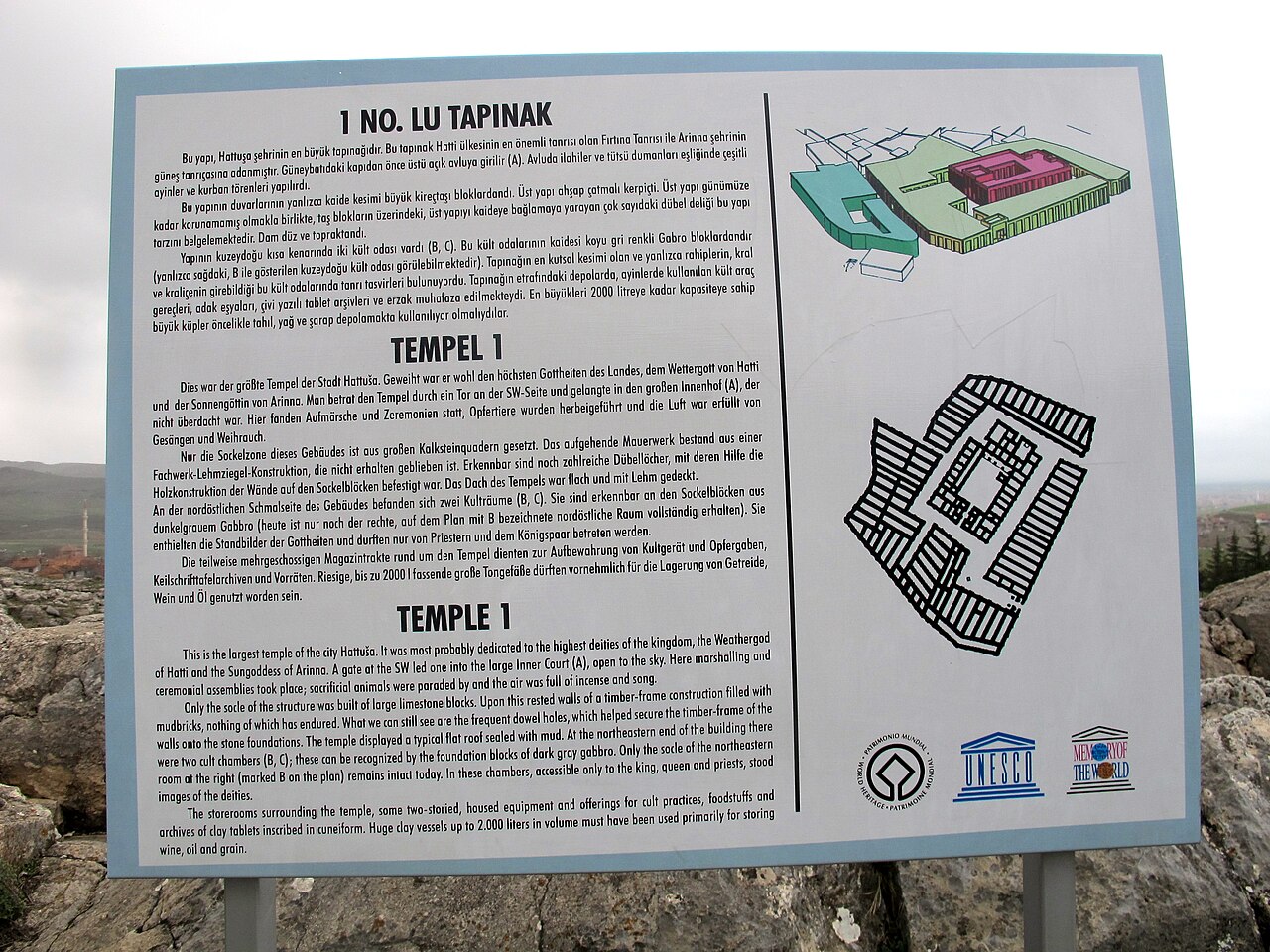
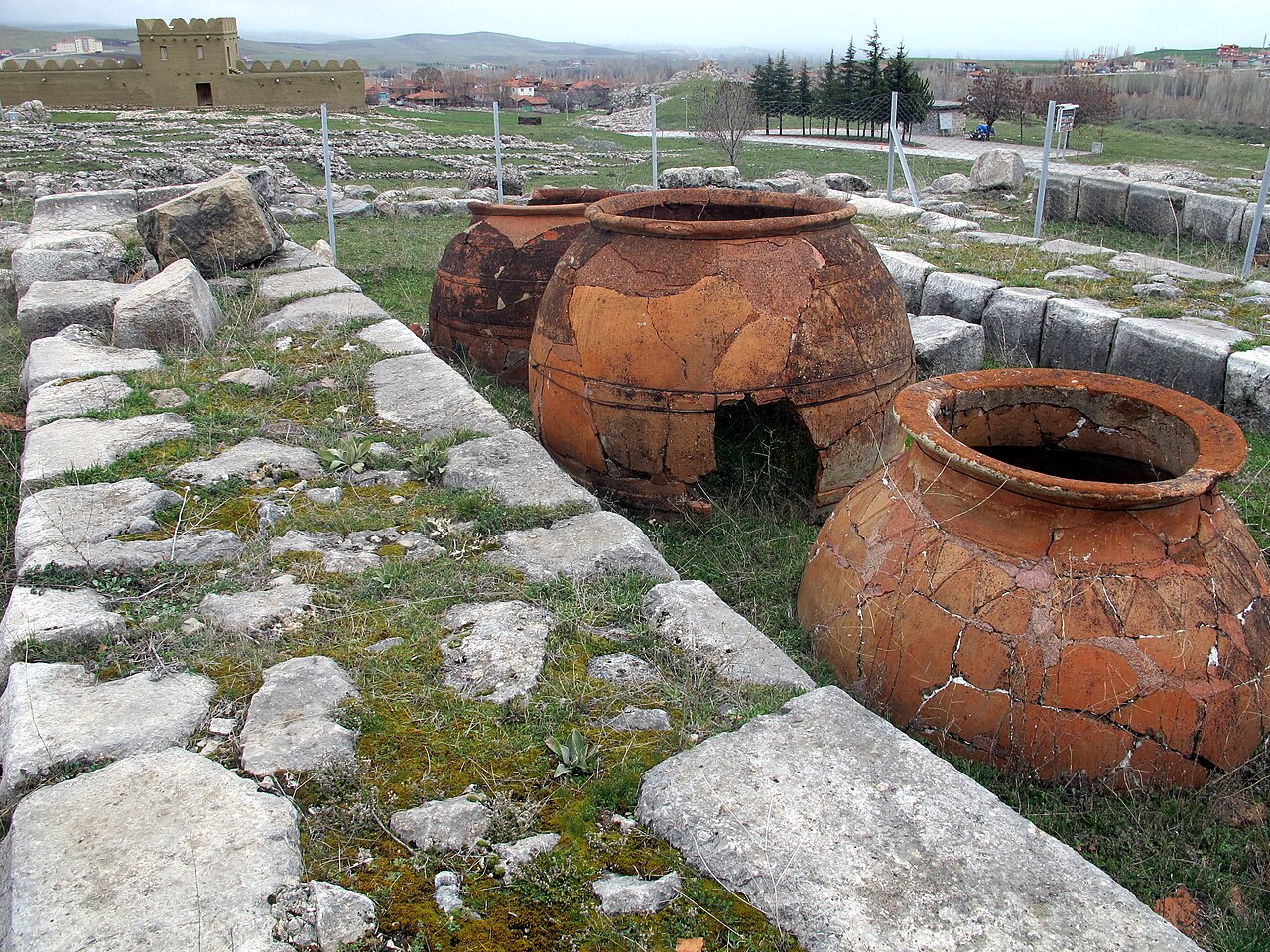
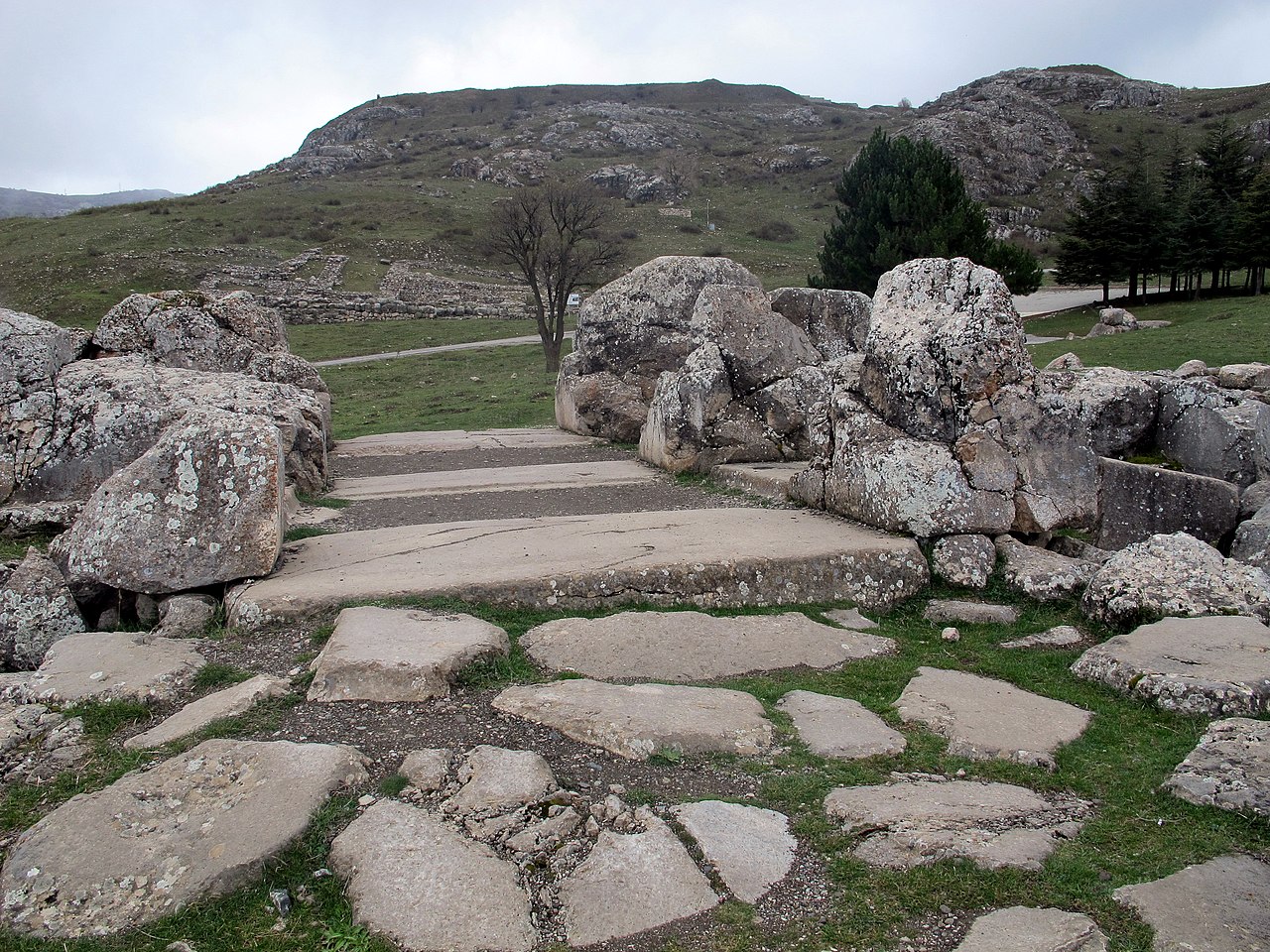
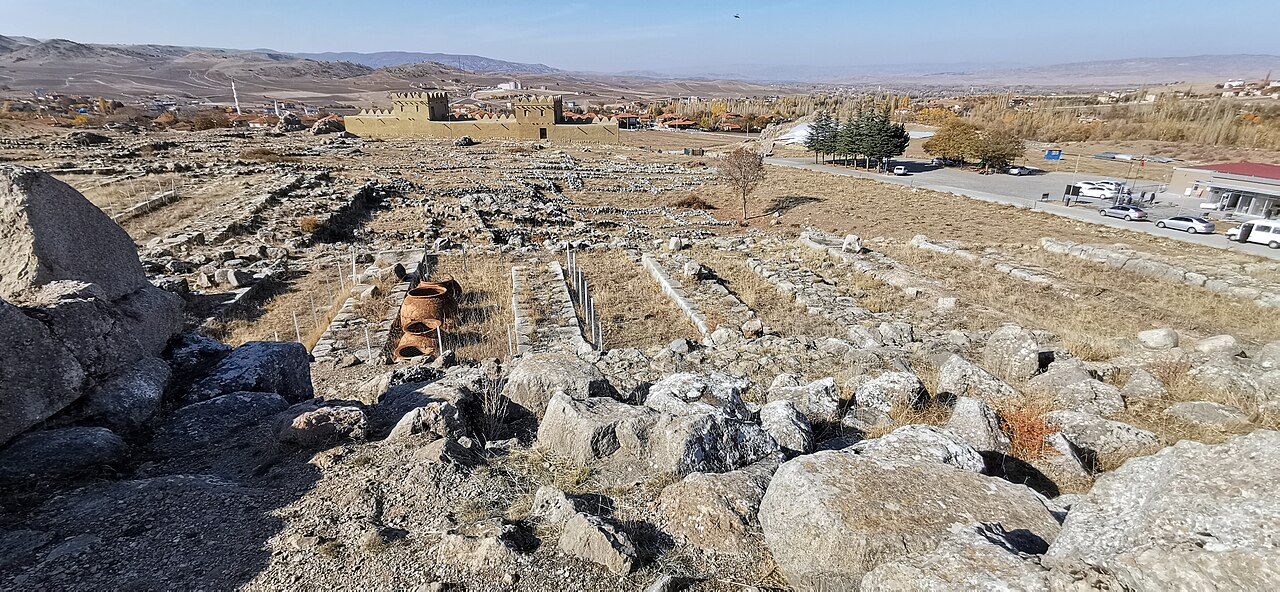
At its zenith, Hattusa sprawled across 1.8 square kilometers, divided into an inner and outer zone encircled by a formidable double wall system built during the reign of Suppiluliuma I around 1344–1322 BC. The walls stretched over six kilometers in total length, with two layers roughly three meters thick separated by a two-meter gap, yielding a combined thickness of eight meters. The inner city, covering about 0.8 square kilometers, housed a citadel on the high ridge now called Büyükkale, along with large administrative buildings and temples. To the south, the outer city of roughly one square kilometer featured four temples arranged around porticoed courtyards, secular structures, and residential quarters. Elaborate gateways bore relief carvings of warriors, lions, and sphinxes. Modern estimates place the population at around ten thousand, with a third concentrated in the inner city during the early period. Outside the walls, cemeteries preserved cremation burials. The timber-and-mudbrick dwellings have long since vanished, leaving only the enduring stone foundations of palaces and temples.
From Forgotten Ruins to Cuneiform Treasure
For centuries, the monumental remains near Boğazköy attracted little scholarly attention until French archaeologist Charles Texier visited in 1834, producing topographical measurements, illustrations, and a preliminary site plan. Sporadic visits followed, including Heinrich Barth's 1858 expedition and Georges Perrot's 1861 excavations at the site and nearby Yazılıkaya. It was not until 1886 that Perrot first proposed Boğazköy was the Hittite capital of Hattusa. Ernest Chantre's 1893–94 trial trenches, cut short by a cholera outbreak, yielded crucial fragments of cuneiform clay tablets in both Akkadian and what would later be identified as Hittite. The breakthrough came in 1905 when Hugo Winckler, working for the German Oriental Society, recovered thirty-five tablet fragments at Büyükkale. His 1906 excavations unearthed thousands of tablets, and the Akkadian texts confirmed the site's identity. Publication followed in two major series, and systematic German-led digs continued through the twentieth century under scholars like Kurt Bittel and Peter Neve.
Twilight, Collapse, and Enduring Memory
Hattusa did not fall in a single catastrophic moment. Excavations indicate the city was gradually abandoned over several decades as the Hittite empire disintegrated around 1200 BC, part of the broader Late Bronze Age collapse. A regional drought has been proposed as a contributing factor. Signs of final destruction by fire are present, but this conflagration likely occurred after the royal family, elites, and state institutions had already departed. By the twelfth century BC, agricultural communities with a material culture distinct from the Hittites had settled among the ruins. The city's story, however, did not end in obscurity. The ruins near modern Boğazkale, Turkey, sit within the great bend of the Kızılırmak River, and the massive walls remain visible to this day. In 1986, Hattusa was inscribed on the UNESCO World Heritage Site list, and the systematic excavations begun by the German Oriental Society and the German Archaeological Institute in the early twentieth century continue, keeping the voice of a vanished empire alive for modern study.
Gallery
Frequently Asked Questions
What is Hattusa?
Hattusa was the capital city of the Hittite Empire during the late Bronze Age, holding that status in two separate periods. Its ruins sit near modern Boğazkale in central Turkey, nestled inside the wide bend of the Kızılırmak River.
What are the different spellings or names for Hattusa?
The city appears under several variants—Hattuşa, Ḫattuša, Hattusas, and Hattusha—depending on the language and era of the source. All of them refer to the same Hittite capital near Boğazkale, Turkey.
More in Ancient Cities 1-24
Elsewhere in the Ancient Cities universe
Spotted an error? Know more?
This is a living reference — every entry is fact-audited, and reader corrections feed straight into our audit queue. Suggest an edit · See this site's audit record